
Hospitality
⭐ Featured
Key Signals That Indicate It’s Time for Mystery Guest Evaluations in Hospitality
In today’s hospitality environment, guest expectations evolve faster than internal systems can adapt. Travelers arrive with experiences shaped by global standards, online reviews, and digital interactions. As a result, hotels can no longer rely solely on internal reporting or periodic inspections to understand how service is truly delivered.
S
super admin
Author
23 August 2026
9 views
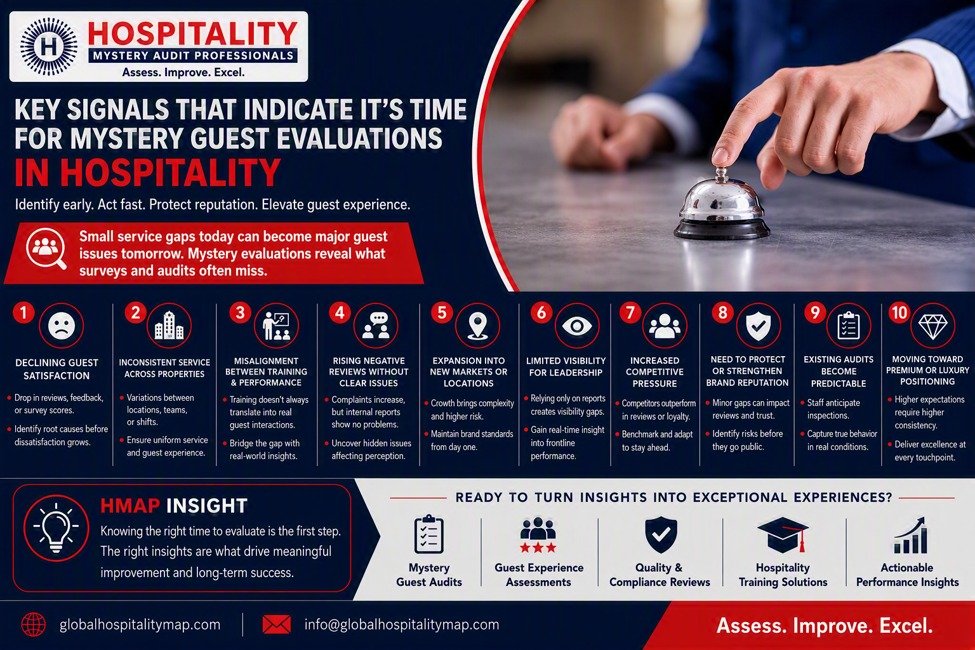
The challenge is not understanding what mystery evaluations are but knowing when to implement them for maximum impact.
Declining Guest Satisfaction
A gradual drop in satisfaction scores is often the first and most critical indicator.
This may appear in:
• Online reviews
• Guest surveys
• Internal feedback systems
The issue is that such declines are rarely linked to a single, visible problem. Instead, they reflect multiple small inconsistencies across the guest journey.
Mystery evaluations help identify:
• The exact points where service breaks down
• The specific interactions affecting guest perception
• The underlying reasons behind dissatisfaction
Early intervention prevents long-term impact on reputation and revenue.
Inconsistent Service Across Properties
For hotel groups, maintaining uniformity is a continuous challenge.
Service variations may occur:
• Between different locations
• Across departments
• During different shifts
These inconsistencies weaken brand identity and reduce guest trust.
Structured evaluations provide:
• Clear comparisons between properties
• Insight into deviations from brand standards
• Opportunities to standardize service delivery
Misalignment Between Training and Real Performance
Training programs often focus on ideal scenarios, while real guest interactions are far more dynamic.
When trained staff still fail to meet expectations, it signals a disconnect.
Mystery guest evaluations bridge this gap by:
• Capturing real staff behavior
• Highlighting practical performance gaps
• Providing data to redesign training programs
This ensures training becomes relevant, practical, and results driven.
Rising Negative Reviews Without Clear Internal Issues
Another critical trigger is when guest complaints increase but internal systems show no major problems.
This indicates a disconnect between:
• Internal perception
• External guest experience
Mystery evaluations uncover hidden issues such as:
• Delays in service
• Lack of attentiveness
• Weak communication
• Inconsistent service tone
This aligns operational reality with guest perception.
Expansion Into New Markets or Locations
Growth introduces complexity.
New properties bring:
• Different workforce dynamics
• Varying service expectations
• Higher risk of inconsistent delivery
Implementing mystery evaluations during expansion helps:
• Maintain brand standards
• Ensure consistency across locations
• Identify regional performance gaps early
Limited Visibility for Leadership
Senior management often relies on reports that reflect internal views rather than actual guest experiences.
Over time, this creates a visibility gap.
Mystery evaluations provide:
• Real-time observation of service delivery
• Insight into frontline performance
• An unbiased view across departments
This is particularly valuable for multi-property oversight.
Increased Competitive Pressure
When competitors begin outperforming in reviews, reputation, or guest loyalty, it signals a shift in market expectations.
Mystery evaluations help hotels:
• Benchmark performance
• Identify competitive gaps
• Adapt faster to changing expectations
Need to Protect or Strengthen Brand Reputation
Brand reputation is built on consistency.
Even minor service failures can:
• Impact reviews
• Reduce guest trust
• Affect long-term loyalty
Mystery evaluations help safeguard reputation by identifying risks before they become visible to the public.
Existing Audit Systems Become Predictable
Traditional audits often lose effectiveness over time.
When staff anticipate evaluations, behavior changes temporarily, creating misleading results.
Mystery assessments:
• Eliminate predictability
• Capture true behavior
• Reflect everyday operational reality
Moving Toward Premium or Luxury Positioning
Hotels aiming for higher positioning face significantly increased expectations.
Guests expect:
• Personalization
• Attention to detail
• Emotional engagement
Mystery evaluations ensure these expectations are consistently delivered across all touchpoints.
Why HMAP Is the Strategic Partner for Timely Implementation
Recognizing the right moment to implement mystery guest evaluations is only the first step. The real impact depends on how effectively those evaluations translate into operational improvement.
This is where Hospitality Mystery Audit Professionals (HMAP) stands apart.
HMAP’s approach is designed not just to identify triggers, but to convert them into structured improvement strategies aligned with each hotel’s business goals.
What differentiates HMAP:
Trigger-Based Evaluation Frameworks
Rather than generic audits, HMAP designs programs aligned with specific operational challenges whether related to declining satisfaction, expansion, or inconsistency.
Deep Hospitality Expertise
Evaluators understand real operational environments, enabling accurate identification of both visible and hidden service gaps.
Action-Oriented Insights
Findings are delivered with clear priorities, root causes, and practical recommendations that support immediate implementation.
Scalability Across Properties
For growing hotel groups, HMAP ensures standardized evaluation across locations while adapting to regional expectations.
Data-Driven Decision Support
Structured reporting enables leadership teams to monitor trends, track improvements, and make informed strategic decisions.
Partnership Approach
HMAP works closely with hotel leadership teams to ensure evaluations are part of a continuous improvement system not a one-time exercise.
From Identifying Triggers to Driving Performance
With the right partner, mystery guest evaluations become more than a response to operational issues they become a proactive performance system.
Hotels benefit through:
• Improved service consistency
• Faster issue resolution
• Stronger team alignment
• Higher guest satisfaction
Conclusion
Knowing when to implement mystery guest evaluations is as critical as understanding their value.
Triggers such as declining satisfaction, inconsistent service, expansion challenges, and limited operational visibility highlight the need for structured evaluation systems.
Hotels that act on these signals early are better positioned to:
• Enhance guest experience
• Improve performance
• Strengthening brand reputation
• Stay competitive in an evolving hospitality landscape
We value your insights and invite you to contribute to the discussion. Your email address will remain confidential. Fields marked with * are mandatory.
Related Articles
Hospitality
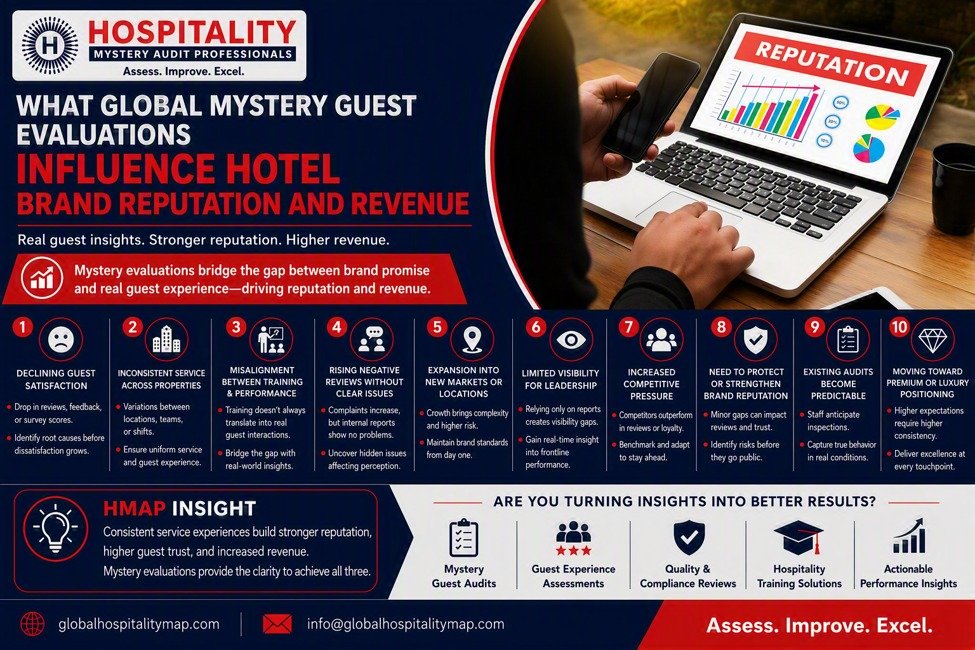
What Global Mystery Guest Evaluations Influence Hotel Brand Reputation and Revenue
01 May 2026
Hospitality
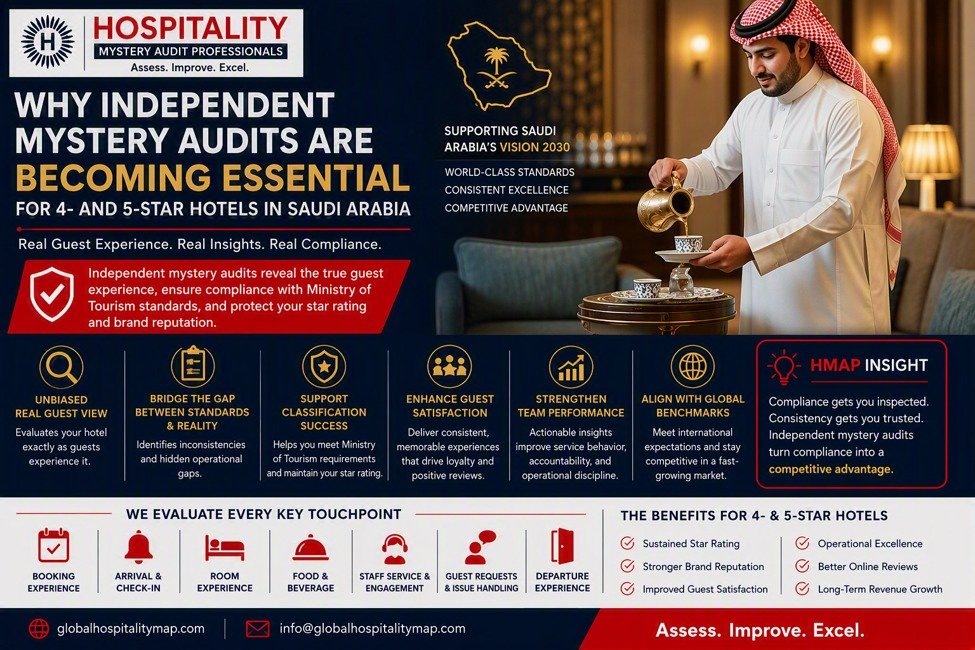
Why Independent Mystery Audits Are Becoming Essential for 4- and 5-Star Hotels in Saudi Arabia
04 Mar 2026
Hospitality
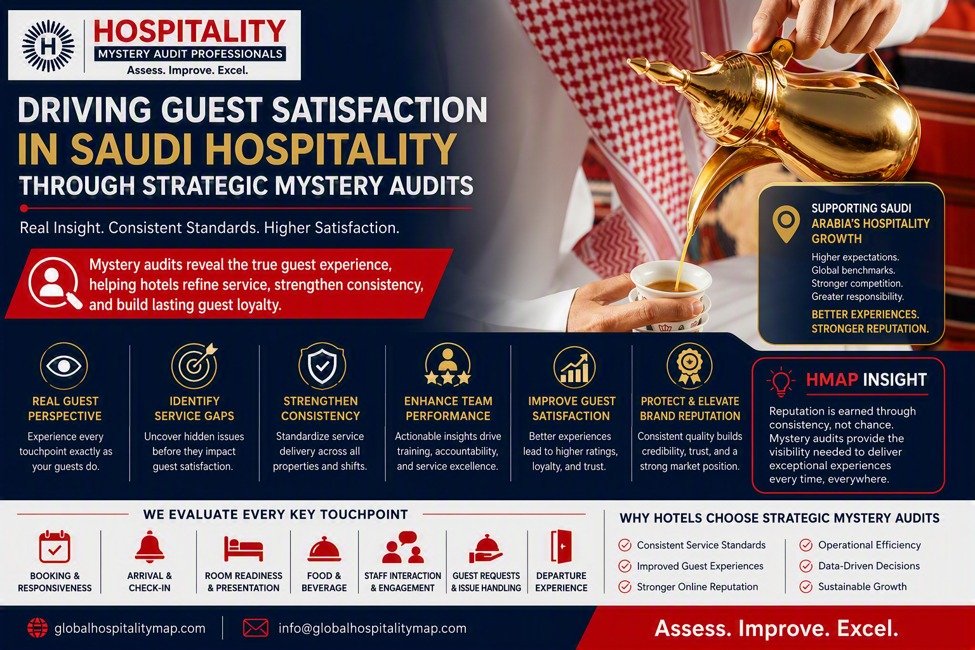
Driving Guest Satisfaction in Saudi Hospitality Through Strategic Mystery Audits
02 Jan 2026