
Hospitality
⭐ Featured
Five Common Guest Experience Gaps Observed Across the Hospitality Industry
In today's competitive hospitality landscape, most hotels have well-developed standards, SOPs, and training programs. Yet many properties continue to experience guest dissatisfaction, negative reviews, and missed opportunities for loyalty. The challenge is often not the absence of standards but the gap between standards and consistent execution. Here are five common guest experience gaps frequently observed across the hospitality industry.
L
logesh
Author
13 May 2025
53 views
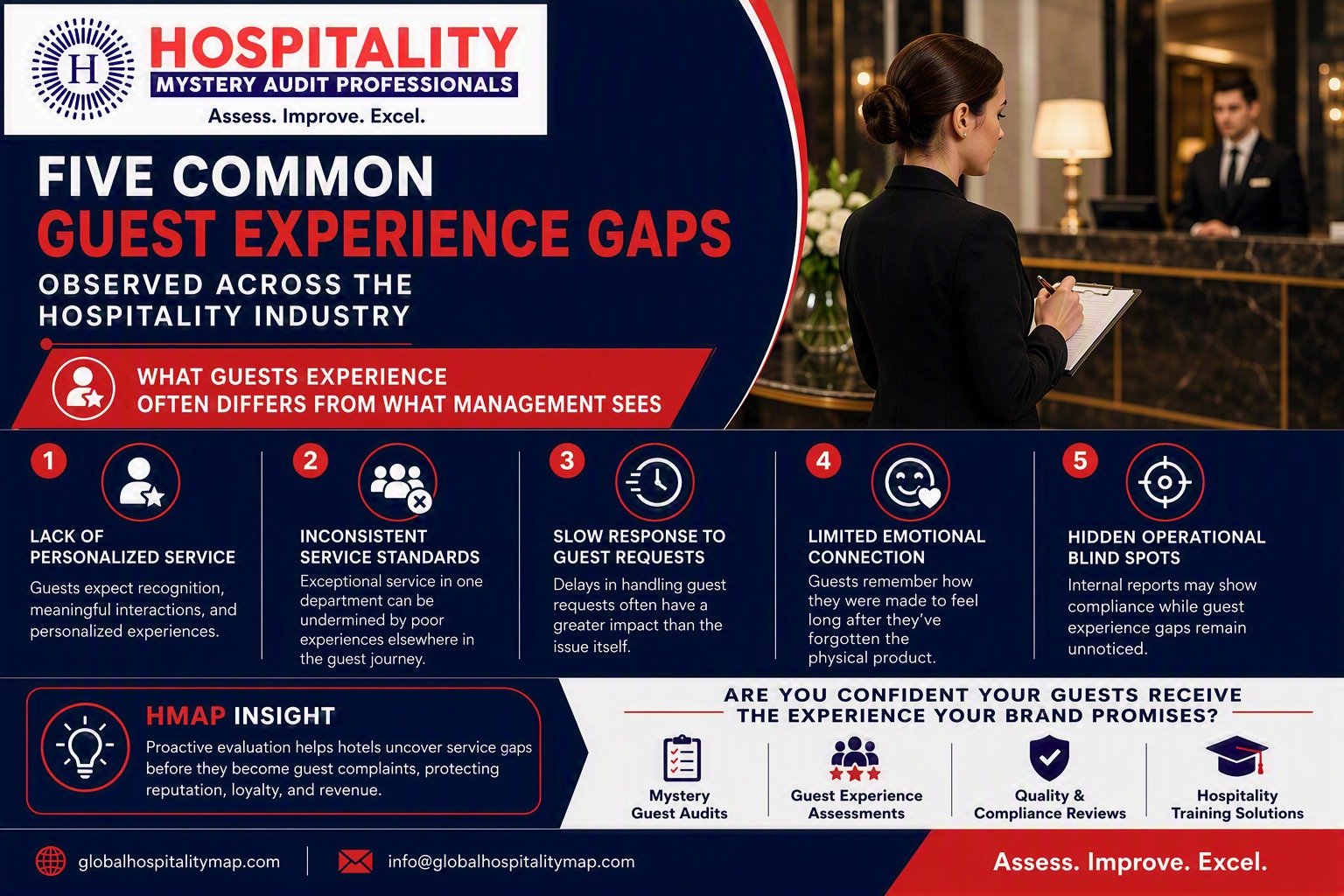
Five Common Guest Experience Gaps Observed Across the Hospitality Industry
In today's competitive hospitality landscape, most hotels have well-developed standards, SOPs, and training programs. Yet many properties continue to experience guest dissatisfaction, negative reviews, and missed opportunities for loyalty. The challenge is often not the absence of standards but the gap between standards and consistent execution.
Here are five common guest experience gaps frequently observed across the hospitality industry.
1. Lack of Personalized Guest Interactions
Guests increasingly expect more than transactional service. While many hotels collect guest preferences and profile information, front line teams often fail to utilize this knowledge effectively.
Examples include:
*Failing to acknowledge repeat guests.
*Missing opportunities to recognize special occasions.
*Delivering scripted rather than genuine interactions.
Impact: Guests may feel processed rather than valued, reducing emotional connection and brand loyalty.
Question for Hoteliers: Are your associates creating memorable moments or simply completing transactions?
2. Inconsistent Service Delivery Across Departments
A guest's experience is only as strong as its weakest touch point.
Hotels may provide: Excellent check-in experiences
But struggle with:
*Slow room service delivery
*Delayed housekeeping responses
*Inconsistent restaurant service
*Poor interdepartmental communication
Guests do not evaluate departments separately; they evaluate their overall experience.
Impact: Inconsistency creates confusion and erodes trust in the brand promise.
Question for Hoteliers: Would your service standards achieve the same score across every guest touch point?
3. Delayed Response to Guest Requests
Speed of response remains one of the strongest drivers of guest satisfaction.
Common examples include:
*Unanswered phone calls
*Delayed maintenance requests
*Slow luggage delivery
*Long wait times for service recovery
Guests often remember how quickly their concerns were handled more than the concern itself.
Impact: Even minor issues can escalate into negative reviews when responses are delayed.
Question for Hoteliers: How easy is it for your guests to receive immediate assistance when they need it?
4. Lack of Emotional Connection During Service Delivery
Many hospitality teams focus heavily on operational efficiency while overlooking the emotional aspects of the guest journey.
Guests may receive:
*Correct information
*Accurate bills
*Efficient service
Yet still leave without feeling genuinely welcomed or appreciated.
True hospitality occurs when service combines efficiency with warmth, empathy, and authenticity.
Impact: The hotel meets expectations but fails to create memorable experiences that drive repeat business.
Question for Hoteliers: Do your guests remember the service process or the people who delivered it?
5. Management's View Differs from the Guest's Reality
One of the most significant challenges in hospitality is that management often sees operations from an internal perspective, while guests experience them from an emotional perspective.
For example:
*SOPs may be followed correctly.
*Reports may indicate compliance.
*Team members may believe service is excellent.
Yet hidden service gaps remain unnoticed until they appear in guest reviews or complaints.
Impact: Businesses may make decisions based on assumptions rather than actual guest experiences.
Question for Hoteliers: Are you measuring performance through reports alone, or through the eyes of your guests?
Final Thought
Great hotels do not wait for negative reviews to identify service gaps. They proactively evaluate the guest journey, uncover hidden opportunities, and continuously improve their service culture.
The most successful hospitality organizations understand that exceptional guest experiences are not created by chance they are measured, monitored, and managed consistently.
Hospitality MAP - Hospitality Insight
What do you believe is the biggest gap in the guest experience gap facing hotels today?
Share your thoughts in the comments below.
We value your insights and invite you to contribute to the discussion. Your email address will remain confidential. Fields marked with * are mandatory.
Related Articles
Hospitality
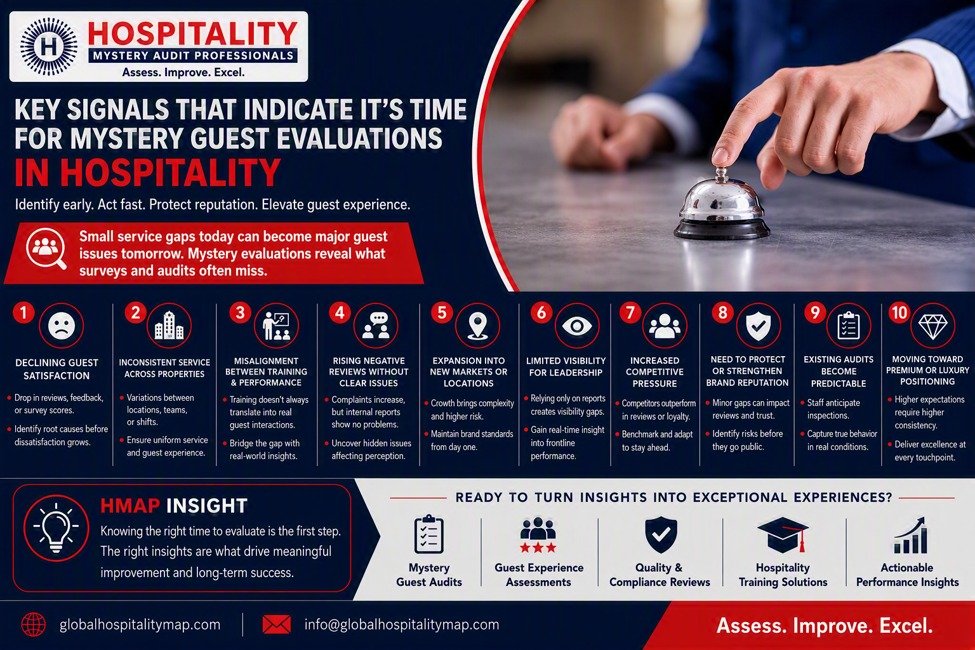
Key Signals That Indicate It’s Time for Mystery Guest Evaluations in Hospitality
23 Aug 2026
Hospitality
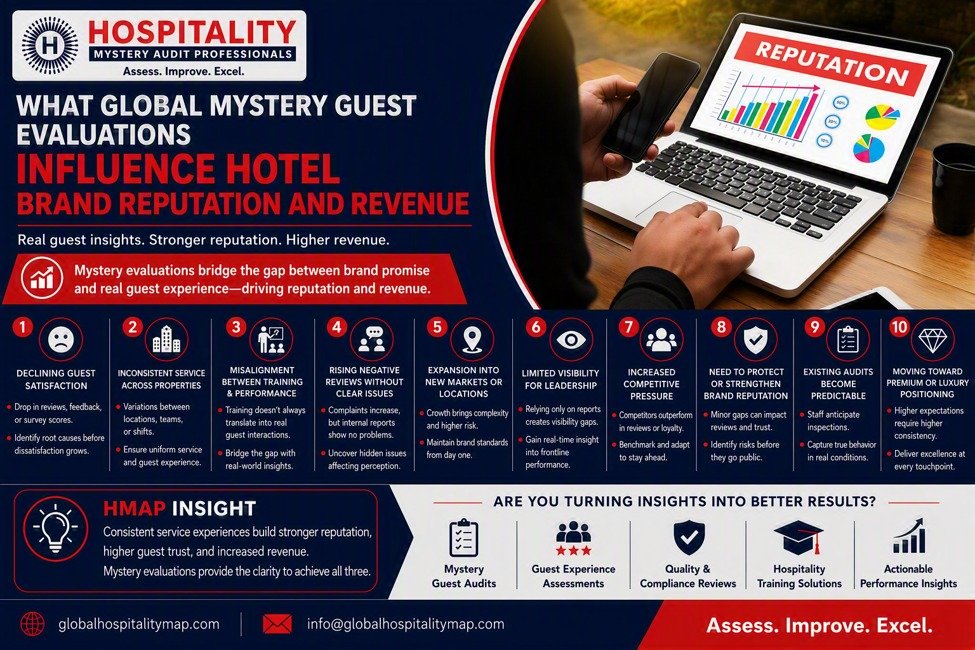
What Global Mystery Guest Evaluations Influence Hotel Brand Reputation and Revenue
01 May 2026
Hospitality
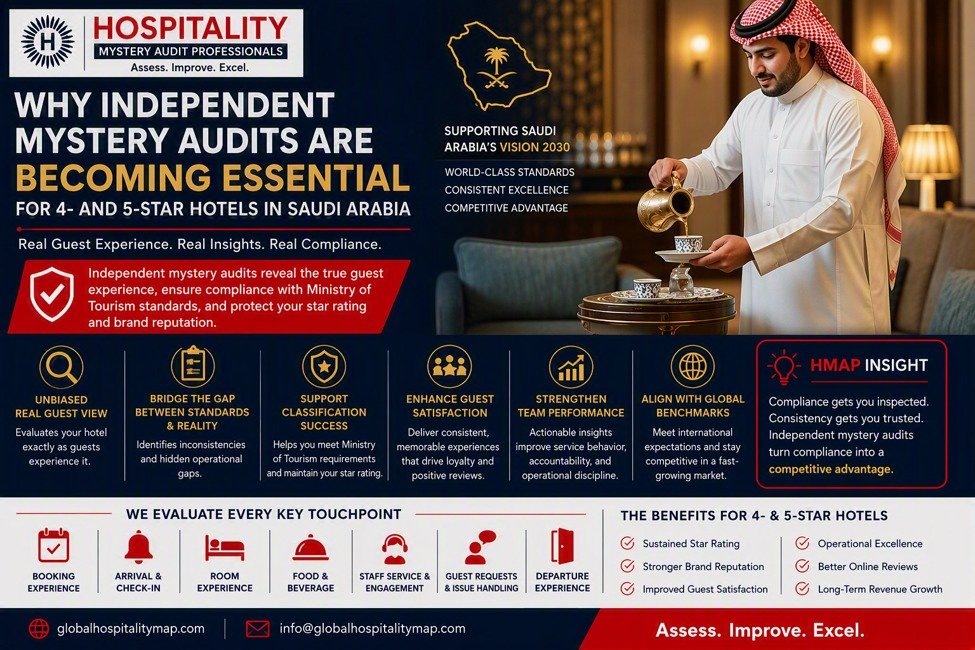
Why Independent Mystery Audits Are Becoming Essential for 4- and 5-Star Hotels in Saudi Arabia
04 Mar 2026