
Hospitality
⭐ Featured
How Mystery Shopping Is Shaping the Future of Guest Experience Evaluation
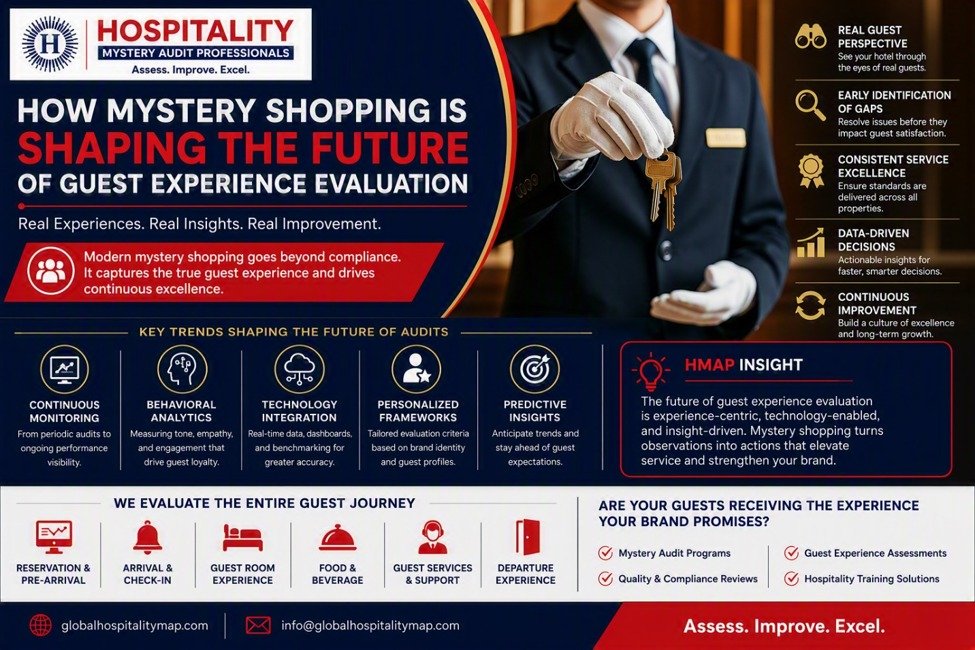
The way hotels measure service quality is undergoing a significant shift. What once relied heavily on internal checks and compliance reviews is now evolving into a more dynamic, experience-driven approach. As guest expectations become more refined, static evaluation methods are no longer sufficient to capture the true performance of a property.
S
super admin
Author
13 August 2023
5 views
A Shift in How Quality Is Measured
Traditional audit models have long focused on verifying standards ensuring procedures are followed and operational benchmarks are met. While these remain important, they often overlook how service is perceived.
Modern evaluation frameworks are expanding beyond compliance to include behavioral quality, responsiveness, and emotional impact. This shift reflects a broader recognition that guest satisfaction is shaped not just by what is done, but by how it is delivered.
The Expanding Role of Experience-Led Evaluation
Hospitality brands are increasingly adopting evaluation models that replicate real guest experiences. Instead of isolated checks, the focus is now on understanding the entire journey capturing how each interaction contributes to the overall impression.
Mystery-based evaluations play a central role in this approach. By simulating authentic stays, they reveal inconsistencies, highlight service strengths, and provide a clearer picture of operational reality.
Balancing Technology with Human Insight
Advancements in technology are reshaping how audits are conducted. Data dashboards, analytics tools, and automation have significantly improved reporting speed and accessibility.
However, technology alone cannot interpret nuance. Human evaluation remains essential for assessing tone, empathy, attentiveness, and situational response elements that define high-quality hospitality. The most effective audit systems combine both analytical precision and human observation to deliver meaningful insights.
Maintaining Consistency in a Global Environment
As hospitality brands expand across regions, ensuring consistent guest experience becomes increasingly complex. Differences in culture, training, and operations can lead to variations in service delivery.
Mystery shopping frameworks help address this by applying standardized evaluation criteria across multiple locations. This allows organizations to maintain clarity on performance while ensuring that brand standards are consistently reflected in everyday operations.
From Reactive Feedback to Real-Time Insight
Relying solely on post-stay feedback limits a hotel’s ability to act proactively. By the time an issue is identified through reviews, the guest experience has already been affected.
Modern audit approaches are shifting toward more immediate insight. Mystery evaluations provide structured observations that help identify issues early, enabling faster corrective action and reducing the likelihood of recurring problems.
Strengthening Consistency Across Properties
Service inconsistency is one of the most common challenges in multi-property operations. Despite shared standards, the guest experience can vary due to local execution differences.
Mystery shopping helps uncover these variations by measuring how standards are applied in practice. The insights gained allow leadership teams to implement targeted improvements, ensuring a more uniform experience across all locations.
Emerging Trends in Hospitality Auditing
The future of audit systems is expected to be more continuous, data-integrated, and predictive.
Key trends include:
• Ongoing performance monitoring rather than periodic reviews
• Integration of behavioral analytics into evaluation frameworks
• Use of advanced data tools for trend identification
• Greater personalization in audit criteria based on guest profiles
These developments are shaping a more agile and responsive approach to quality assurance.
Supporting Employee Development Through Insight
Beyond identifying gaps, modern audit systems serve as powerful tools for team development.
Detailed evaluation feedback helps employees understand expectations more clearly and refine their service approach. Rather than acting as a compliance mechanism, audits are increasingly used to support learning, coaching, and professional growth.
This contributes to a stronger service culture where continuous improvement becomes part of daily operations.
The Move Toward Experience-Centric Hospitality
Guest expectations have shifted from transactional service to meaningful experiences. Efficiency alone is no longer enough for guests’ value personalization, attentiveness, and emotional connection.
Audit methodologies are adapting accordingly. Success is now measured not only through accuracy and speed, but through the quality of engagement and the overall impression created.
Challenges in Adopting Advanced Audit Systems
While the benefits are clear, transitioning to modern audit models requires careful implementation.
Common challenges include:
• Ensuring evaluator consistency across locations
• Maintaining objectivity in qualitative assessments
• Integrating insights into existing reporting systems
• Balancing investment with long-term value
Addressing these challenges requires structured frameworks and experienced partners who understand both operational realities and strategic objectives.
Driving Future-Ready Audits with HMAP
At Hospitality Mystery Audit Professionals (Hospitality MAP), we focus on helping hospitality brands adapt to this evolving landscape through structured, experience-driven evaluation systems.
Our approach integrates detailed guest journey analysis with practical insights, enabling hotels to understand performance from a real guest perspective. By combining analytical rigor with hospitality expertise, we support organizations in strengthening consistency, refining service delivery, and enhancing overall guest satisfaction.
Conclusion
The evolution of hospitality auditing reflects a broader shift toward experience-driven service. As guest expectations continue to rise, evaluation methods must evolve to capture what truly matters.
Mystery shopping is no longer a supplementary tool it is becoming central to how hotels understand and improve service quality. By combining real-world observation with structured analysis, it provides the clarity needed to navigate an increasingly competitive and experience-focused industry.
The future of hospitality excellence will be defined by those who can measure, understand, and continuously enhance the guest experience and modern audit systems will play a critical role in that journey.
We value your insights and invite you to contribute to the discussion. Your email address will remain confidential. Fields marked with * are mandatory.
Related Articles
Hospitality
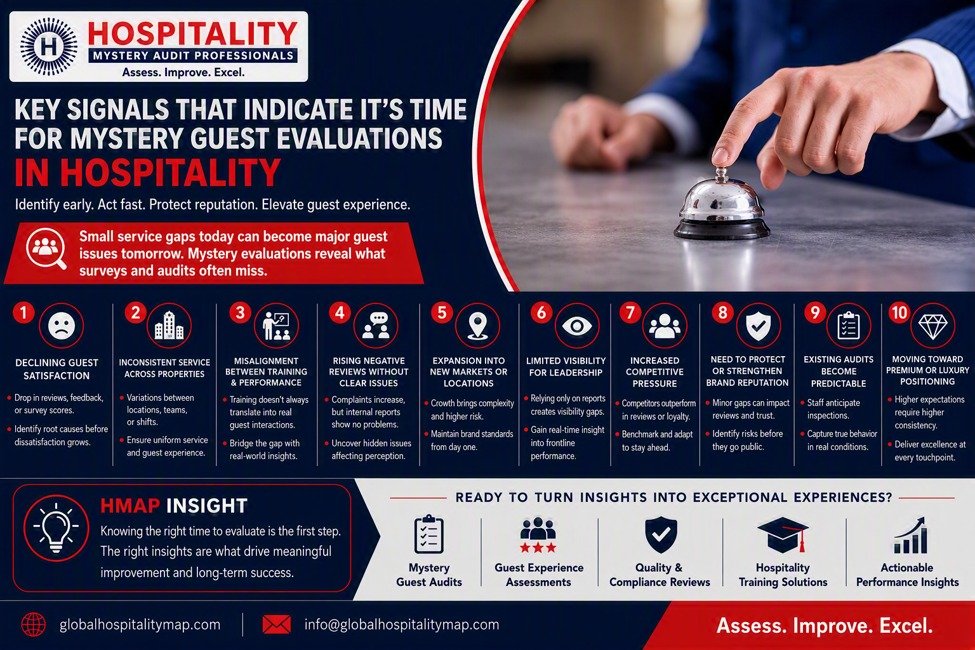
Key Signals That Indicate It’s Time for Mystery Guest Evaluations in Hospitality
23 Aug 2026
Hospitality
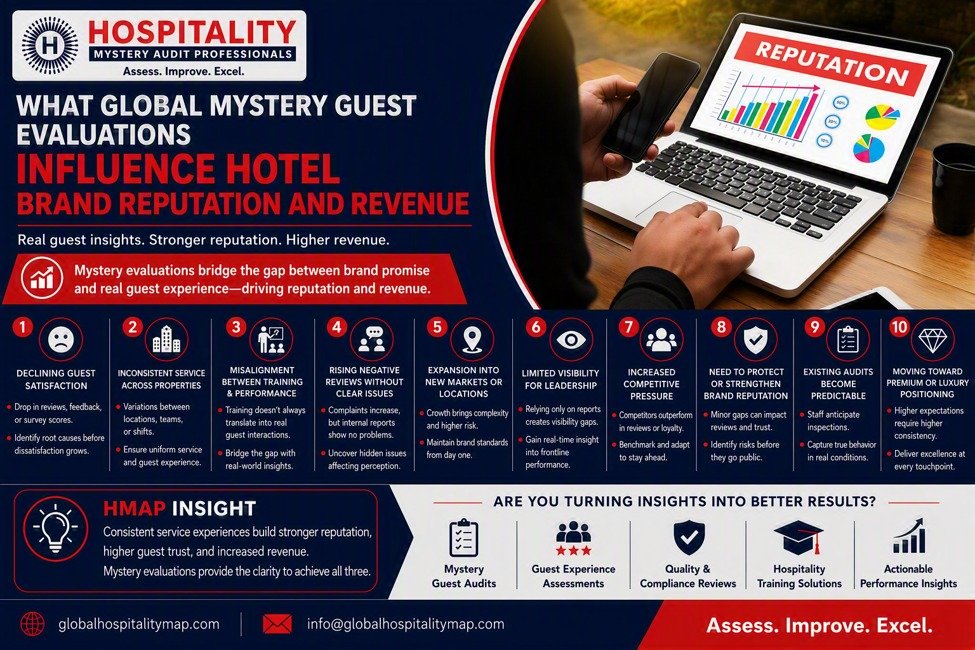
What Global Mystery Guest Evaluations Influence Hotel Brand Reputation and Revenue
01 May 2026
Hospitality
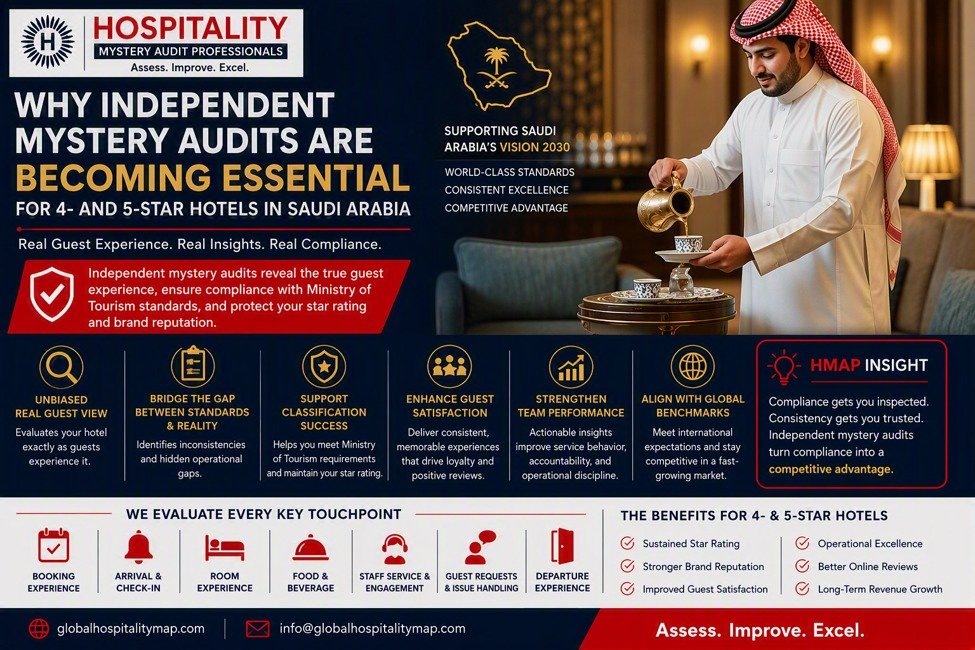
Why Independent Mystery Audits Are Becoming Essential for 4- and 5-Star Hotels in Saudi Arabia
04 Mar 2026